
The 🐂 Case for the Insurance Sector
2 min read
While markets fixate on oil prices and central bank policy, one corner of the market is repricing for a world that has entered a prolonged period of heightened risk. Some investors haven't noticed yet.
The closure of the Strait of Hormuz has triggered what energy executives are calling the largest oil supply disruption in history. The headlines are dominated by crude prices, tanker rerouting, and central bank policy paralysis. But there is a quieter story playing out, one that rewards investors who look a layer deeper.
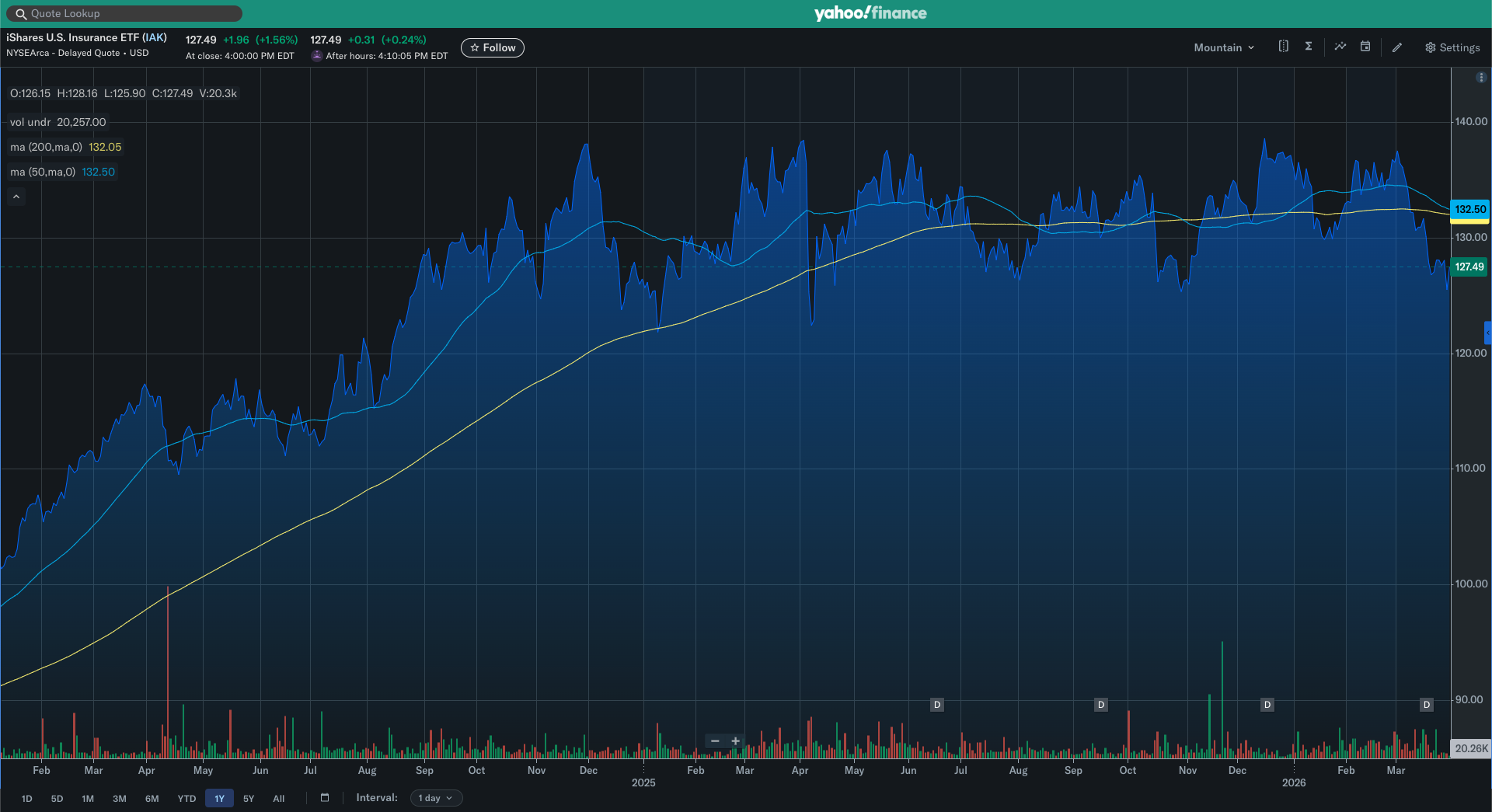
That story is the insurance sector. And the iShares U.S. Insurance ETF ($IAK) is the most accessible way to own it.
Two Revenue Engines Running at Full Speed
Insurance companies make money two ways: underwriting premiums and investing the float. The Hormuz crisis is supercharging both engines simultaneously, and that combination is rare.
On the underwriting side, war risk premiums for maritime cargo, energy infrastructure, and supply chain coverage are repricing sharply higher. Every tanker that reroutes around the Cape of Good Hope, every LNG terminal requiring enhanced coverage, every multinational hedging political risk, all of it flows directly to the carriers held inside IAK. Premium inflation is real, persistent, and largely invisible to the casual market observer. Insurers don't just absorb this risk. They price it. And right now, they're pricing it aggressively.
On the investment side, insurers hold enormous fixed income portfolios. The same elevated rate environment that makes short-duration bond ETFs attractive also fattens the float returns that underpin insurer profitability. With the Fed holding rates steady in the face of stagflation pressure, that tailwind isn't going away anytime soon.
The Numbers Behind IAK
$IAK isn't a speculative play. It's a blue-chip, low-volatility ETF with an impressive long-run track record:
• 5-year annualized return: 17.13%, versus 12.01% for its financial category peers
• 5-star Morningstar rating over the 5-year period
• Trades at a reasonable 18x P/E relative to the broader market.
• 18x earnings is a premium to its historical range but supported by an unusual combination of premium inflation and elevated float returns that aren't yet fully reflected in analyst estimates.
• Core holdings include Progressive, Chubb, AIG, Aflac, and MetLife, household names with deep balance sheets.
• Currently rated undervalued by Wall Street analysts.
For investors looking to stay defensive while still generating returns, this ETF offers something unusual: a low-beta profile combined with genuine earnings growth catalysts. That's not a combination you find often.
The Comparable: KIE
For investors who want similar exposure with a different construction, the SPDR S&P Insurance ETF ($KIE) is worth knowing. KIE uses an equal-weight methodology, which reduces the concentration risk that comes with IAK's heavier tilt toward Progressive and Chubb. Equal weighting gives smaller specialty insurers, the ones repricing war and marine risk most aggressively, a larger voice in the portfolio. The two ETFs are complementary rather than competing. Together they offer full-spectrum insurance sector exposure across market cap and specialty.
Why Not Just Own the Individual Insurance Companies?
It's a fair question. You could build a basket of names like Progressive, Chubb, or AIG on your own. But the challenge is concentration risk and incomplete exposure. Different insurers benefit from this environment in different ways. Some are more exposed to auto premiums, others to commercial lines, and a smaller group to specialized areas like marine and war risk coverage. Picking the right mix consistently is harder than it looks.
ETFs like IAK and KIE solve for that.
IAK gives you exposure to the large, well-capitalized leaders with strong underwriting discipline. KIE, with its equal-weight structure, gives smaller and more specialized insurers a bigger role, including those that may be repricing risk the fastest.
Instead of trying to guess which company wins the most, you own the structure that benefits as a whole.
The Bigger Picture
In a portfolio built for stagflation and geopolitical stress, where energy names are volatile, tech multiples are compressing, and cash is earning less than it was six months ago, IAK represents something rare: a position that benefits from the very conditions that are hurting everything else. War risk premiums rise when the world gets more dangerous. Float returns stay elevated when the Fed can't cut. And insurer balance sheets, unlike most companies, actually get stronger when interest rates stay high.
IAK is the position hiding in plain sight. And the window to own it cheaply may not stay open much longer.
Is Your Portfolio Ready for the Next Market Shift?
Stop Worrying About the Market. Markets change, but your goals shouldn't have to.
At Batista Management Group, we specialize in building resilient, forward-looking portfolios designed to protect and grow wealth for the Latino community. Whether you're navigating global energy shifts or securing your retirement, we give you the clear advantage you need to win in any environment.
Let's start a conversation.
www.bmgmtg.com/contact-us | (617) 356-7767
Strength | Alliance | Longevity